The Quick Service Restaurant (QSR) industry is experiencing unprecedented change, driven by evolving consumer expectations, fierce competition, and rapid technological advancement. The ways consumers answer the everyday question, "What are we grabbing for dinner tonight?", are changing almost as quickly as a drive through order can be placed.
Today's QSR customers are no longer passive recipients of traditional fast food advertising. Instead, they are highly informed, digitally connected, and increasingly sceptical of conventional promotions. Rather than relying solely on brand led messaging, consumers now turn to online reviews, social media, and word of mouth recommendations from friends, family, and even strangers when deciding where and what to eat.
Research consistently shows that consumers place significant trust in peer recommendations. Reviews on platforms such as Google, Facebook, Uber Eats, Menulog, and DoorDash strongly influence purchasing decisions, particularly among families and younger consumers. Highly rated products and venues dramatically increase the likelihood of purchase, often outweighing price based promotions or traditional advertising. In many cases, consumer reviews are trusted far more than company generated descriptions or marketing claims.
Technology enables QSR customers to make decisions based on what others within their self defined digital networks choose to share. Whether it's a photo of a new burger on Instagram, a recommendation from a local Facebook community group, or a Google review from a fellow commuter, shared experiences now shape dining choices in real time.
At the same time, how customers access information continues to evolve at breakneck speed. Smartphones have become the primary research tool for QSR consumers, allowing them to compare menus, pricing, reviews, dietary information, and delivery options within seconds. This has redefined the concept of "impulse buying" within the Australian QSR market. While decisions are still made quickly, they are increasingly informed.
With the vast majority of consumers accessing the internet wirelessly, QSR operators must meet higher expectations around convenience, speed, transparency, and digital engagement. Customers expect seamless integration between mobile ordering, in store experiences, and third party delivery platforms. Frictionless payment has become a critical part of this journey, with tap and pay, digital wallets, and contactless transactions now considered standard rather than optional.
Many Australian and global QSR brands operating locally have already embraced these changes. Mobile ordering, app based loyalty programs, click and collect, SMS promotions, and tap and pay payments are now commonplace across major chains and independent operators alike. Customers increasingly expect to customise orders via mobile apps or websites, pay by card or mobile wallet, and collect their meals with minimal delay.
Inside QSR venues, dynamic digital menu boards are becoming the norm. These boards allow operators to highlight best selling items, promote limited time offers, and adjust content based on time of day. Breakfast menus can be targeted at morning commuters, while lunch and afternoon menus cater to tradies, students, office workers, and families. This adaptability helps QSRs optimise sales opportunities while improving operational efficiency.
Alongside digital menus, self service kiosks have quickly become a standard feature across the Australian QSR landscape. These kiosks allow customers to browse the menu, customise their orders, and complete payment using credit or debit cards, Apple Pay, and other contactless options - while some locations still support cash via the counter.
Using a Self Service Kiosk
Upon entering a store or pop-up customers typically begin by selecting whether their order is dine in or takeaway. From there, they can browse menu categories, view high quality food imagery, and customise items by adding or removing ingredients, choosing drink options, or upsizing meals. These kiosks are particularly effective at supporting individual preferences and dietary requirements without placing pressure on counter staff.
Once the order is finalised, payment is completed directly at the kiosk using tap and pay or card. Customers receive a receipt with an order number, which is then displayed on a digital screen when the food is ready for collection at the designated pick up counter.
Benefits and Features of Kiosk Ordering
Self service kiosks deliver benefits for both customers and operators. Studies consistently show that customers tend to spend 20 - 30% more when ordering via a screen, largely due to visually appealing food photography and automated upsell suggestions based on popular trends.
Kiosks also integrate seamlessly with loyalty programs, allowing customers to scan their app or QR code to earn points, redeem rewards, and receive personalised offers. From an operational perspective, kiosks reduce queue times, improve order accuracy, and ease labour pressures - while offering customers a fast, intuitive, and contactless ordering experience.
Importantly, kiosks eliminate the need for staff to memorise daily specials and promotions, reducing stress during peak periods and allowing employees to focus on food preparation and customer service.
Limitations and Human Touchpoints
Despite their advantages, kiosks are not without limitations. Some units do not accept cash, requiring cash paying customers to complete transactions at the counter. Search functionality is often limited, meaning customers must navigate through menu categories rather than using keyword search. Certain special requests - such as coffee refills in personal cups or highly customised orders - may still require interaction with staff.
As a result, the most successful QSR operators treat kiosks as an enhancement, not a replacement, for human service.
Beyond ordering technology, modern QSR venues now offer amenities designed to keep customers connected, including free Wi Fi, charging points, and comfortable seating. The traditional takeaway store is evolving into a hybrid space where customers can eat, work, socialise, and stay digitally connected.
Technology is also transforming how QSRs engage their employees. With a workforce largely made up of younger consumers and international students - and traditionally high turnover rates - digital training has become essential. Video based training, mobile learning platforms, and digital onboarding tools help deliver consistent standards while reducing training time and costs.
What was once considered a simple takeaway meal has become a broader customer experience combining food, convenience, technology, and digital interaction. These experiences drive stronger brand loyalty, repeat visits, and increased spend.
Technology remains the core enabling force behind these industry shifts. In the highly competitive QSR market - marked by tight labour conditions, rising costs, and changing consumer preferences - innovative operators are using emerging technologies to strengthen both customer loyalty and employee engagement.
Drive through technology continues to advance, with intelligent digital menu boards delivering targeted promotions plus ease of use "tap andd pay" as vehicles move through the queue. Loyalty programs connected to QR codes, mobile apps, and digital wallets further personalise the experience while capturing valuable insights into visit frequency and preferences.
Inventory management remains a significant challenge, particularly for QSR operators managing multiple locations across metropolitan and regional areas. Advanced inventory and ordering systems help reduce shrinkage, improve accountability, and free staff to focus on delivering a better customer experience.
The Evolution of Self Service: From Kiosks to Mobile First Ordering
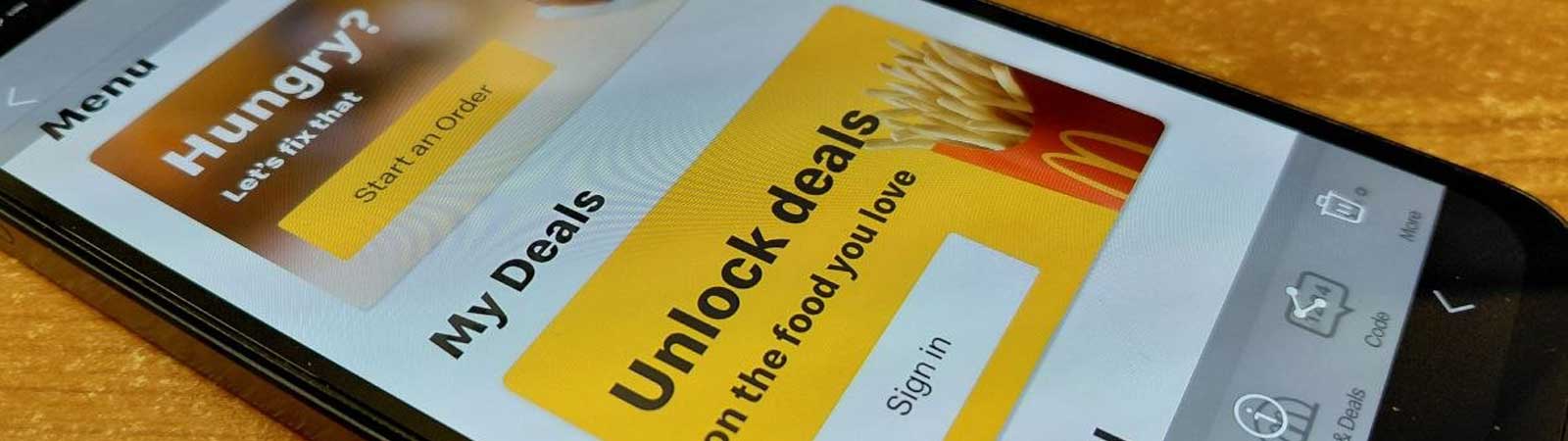
Phone apps are increasingly superseding traditional self service kiosks as the preferred way for customers to interact with services. While kiosks were once seen as a convenient alternative to staffed counters, mobile apps now offer greater speed, flexibility, and personalization. With a smartphone already in their pocket, users can place orders, check in, make payments, and manage preferences without waiting in line or navigating a physical interface.
Unlike kiosks, phone apps extend the service experience beyond a single location. Customers can interact with a business before they arrive and after they leave, receiving real time updates, tailored recommendations, and loyalty rewards. For businesses, this shift reduces hardware costs, frees up floor space, and provides richer data on customer behavior. As mobile technology continues to evolve, phone apps are becoming not just a replacement for kiosks, but a more powerful, end to end self service solution.
This shift is also changing where customers choose to interact with a business. As phone apps make ordering and payment frictionless, many customers now bypass entering the store altogether and opt for the drive thru instead. Orders are placed ahead of time, customised at leisure, and ready on arrival, eliminating the need to queue inside or use in store kiosks. The drive thru becomes a fast pickup lane rather than a point of decision-making.
For businesses, this behaviour reshapes store design and staffing models. Less emphasis is placed on front of house space and customer-facing terminals, while more focus is given to efficient handoff points and backend fulfilment. The result is a service model that prioritises speed and convenience over physical presence, with phone apps effectively acting as the primary interface and the store itself becoming a fulfilment hub rather than a destination.
The move from in store kiosks to phone apps - and the resulting shift toward drive thru and remote ordering - has a mixed but powerful impact on customer loyalty. How it plays out depends largely on how well businesses design the app centric experience.
Strengthens loyalty when done well
1. Habit formation and convenience Phone apps encourage repeat behaviour. When customers save their preferences, payment details, and order history, reordering becomes effortless. This convenience builds habits, and habits are a strong foundation for loyalty. If a customer knows they can get the same result every time with minimal effort, switching to a competitor feels unnecessary.
2. Personalization at scale Apps allow businesses to personalise offers, recommendations, and timing in ways kiosks never could. Tailored discounts, favourite re orders, and location based prompts make customers feel recognised rather than anonymous, increasing emotional attachment to the brand.
3. Loyalty programs become frictionless Digital loyalty programs are easier to track and redeem through apps than via physical cards or receipts. Points are accumulated automatically and rewards are clearly visible, which reinforces the value of sticking with one brand - especially for frequent, drive thru users.
Weakens loyalty if poorly executed
1. Less human connection By bypassing the store interior, customers lose face to face interactions that can create emotional goodwill. For some customers, especially older or less tech savvy ones, this can make the experience feel transactional and replaceable. If every app feels the same, loyalty becomes shallow.
2. Higher switching risk While apps can lock customers in, they also make comparison easy. If a competing app offers faster pickup, better UX, or sharper discounts, customers can switch brands with a few taps. Loyalty becomes more conditional and performance based rather than emotional.
3. Frustration amplifies disengagement App crashes, inaccurate orders, or poorly coordinated drive thru pickups can damage trust quickly. When the app is the primary interface, any failure feels like a brand failure, not just a technical one.
Net effect: loyalty shifts from relationship to reliability
Overall, customer loyalty doesn’t disappear - it changes form. Instead of being driven by in store experience and staff interaction, loyalty becomes anchored in:
- Speed and consistency
- App usability and reliability
- Perceived value through rewards and offers
Brands that treat their app as a core customer relationship tool - not just an ordering channel - tend to see stronger loyalty, even as customers spend less time inside the store. The physical location becomes secondary; the app becomes the brand.
Future trends in ordering
The future of ordering is increasingly frictionless, predictive, and invisible. As mobile apps become the primary interface, the act of placing an order will require less conscious effort from customers. One tap reordering, smart defaults based on past behaviour, and AI driven recommendations will reduce decision time and make the process feel almost automatic.
Ordering is also likely to become more context aware. Apps will factor in location, time of day, traffic, and real time store capacity to suggest optimal ordering moments or pickup methods. Instead of choosing between counter, kiosk, or drive thru, customers may simply confirm an order and be directed to the fastest fulfilment option available.
Voice and conversational interfaces will continue to grow, allowing customers to place orders through digital assistants, in car systems, or wearable devices. This further removes the need for screens altogether, especially for drive thru and on the go scenarios. At the same time, subscription based and scheduled ordering models will expand, where routine purchases are handled automatically unless the customer intervenes.
From a business perspective, stores will continue to evolve into fulfilment hubs rather than traditional retail spaces. Ordering will happen before arrival, and physical locations will be optimised for preparation, pickup, and delivery efficiency. As these trends converge, the most successful brands will be those that make ordering feel effortless while still maintaining trust, accuracy, and a sense of value - turning technology into an enabler rather than a barrier.
For Australian QSR businesses facing inventory or ordering challenges, solutions such as Abcom's eProphet.NET Inventory and Ordering System provide proven support. Trusted by thousands of QSR restaurants for more than two decades, eProphet.NET delivers scalable, reliable inventory management designed specifically for the fast paced QSR environment.
Food quality, value, and consistency will always matter. However, long term success in the Australian QSR industry will increasingly depend on how intelligently operators apply technology - across ordering, payment, training, and operations - to deliver a seamless, modern customer journey from discovery to tap and pay, collection, and feedback.